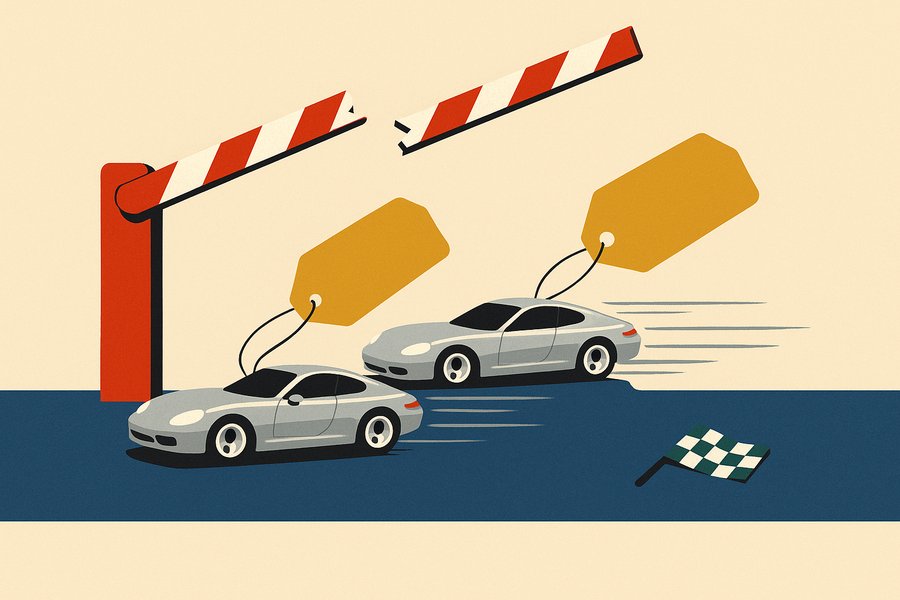
The same executives who spent September warning that artificial intelligence is racing ahead of humanity's ability to control it spent Tuesday releasing new models. Anthropic put out Claude Opus 5.5. Within hours, OpenAI answered with GPT-6 Sol and GPT-6 Luna. What is striking is not that the models arrived, but what the two labs chose to lead with. Not raw power. Price.
Anthropic says Opus 5.5, the first entry in a new Claude 5.5 family, performs at the level of its frontier Fable 5.1 model on most work while costing about 40 percent less to run than Opus 5, with token prices cut to four dollars per million in and twenty out. OpenAI framed its release almost entirely around cost, pitching Sol and Luna as up to 50 percent cheaper than the promotional pricing of their predecessors, savings it attributes to better caching and inference rather than a bigger model. Sol, the company claims, makes about half as many factual mistakes as the version it replaces.
The context is what makes the timing awkward. These are the first releases since Anthropic chief executive Dario Amodei called for the industry to "pace the frontier," a plea echoed by OpenAI's Sam Altman and, in his own register, by Elon Musk. The debate caught fire on September 8, when a former Anthropic researcher quit publicly and accused both labs of "gambling with our lives." Two weeks later, the companies leading that conversation were the ones with fresh product to sell.
There is a defensible reconciliation. The slowdown argument, as its advocates frame it, is about the training of ever-larger frontier models, not about squeezing more value from models that already exist. Opus 5.5 and the new GPT-6 tier are efficiency plays: same-or-better results, fewer tokens, lower bills. Nothing in "pace the frontier" forbids making today's capability cheaper. Both labs also leaned hard on safety claims, with Anthropic saying Opus 5.5 tried to circumvent its guardrails far less often than earlier versions and naming outside evaluators who tested it before release.
But the cost obsession points to a pressure that has little to do with existential risk. Cheaper, openly available models from Chinese firms such as Alibaba, Moonshot AI and DeepSeek have been undercutting the American labs and winning developers who care more about the bill than the benchmark. When OpenAI devotes the top of its announcement to price per task, and Anthropic advertises token efficiency, they are answering that competition, not the safety debate. The next contest, as several trackers noted this week, is shaping up to be about how few tokens a model needs, not how many parameters it has.
Which leaves the open question hanging over the whole episode. Is a call to slow down a sincere response to risk, or a convenient way for the incumbents to raise the cost of catching up? Skeptics abroad read Amodei's push as exactly that: a bid to write the safety rules that would box in rivals. The charitable view is that a company can believe the technology is dangerous and still cut its prices to stay in business. Both things can be true at once, and this week they visibly were.