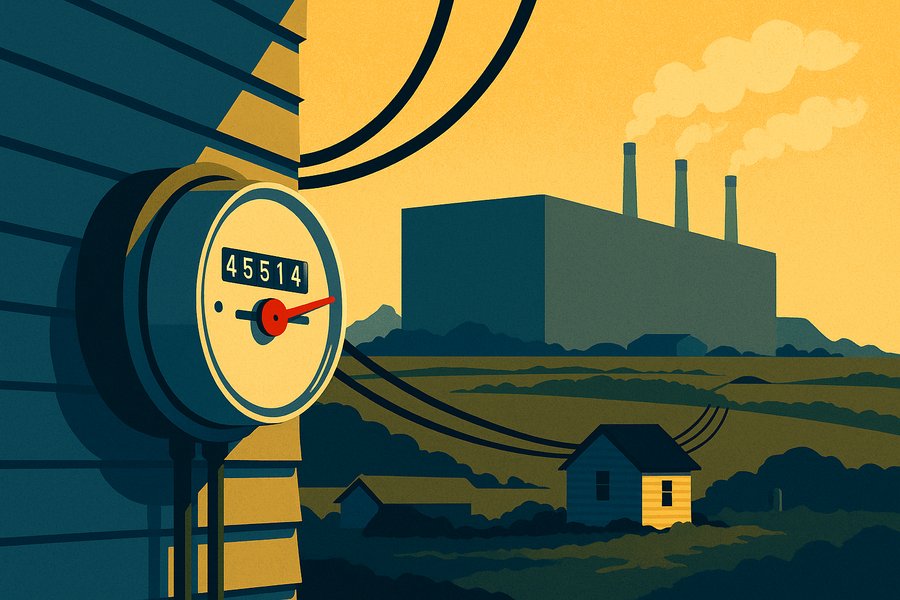
Building a data center now polls about as well as abolishing the police. In an August survey from Heatmap Pro and Embold Research, just 15 percent of Americans said they would welcome one in their area, against 75 percent opposed. A year earlier the same poll was roughly split. That collapse in public patience is the emotional backdrop to a much harder set of numbers: the electricity these buildings need, where it is going to come from, and who ends up paying for it. On all three questions, the answer is turning out to be uncomfortable for the households living nearest the boom.
Start with the supply. According to Global Energy Monitor, the gas-fired power capacity the United States is developing specifically to feed data centers nearly doubled in the first half of 2026, jumping to 189 gigawatts of announced, pre-construction and construction projects. Total US gas capacity in the pipeline rose 50 percent in six months to 378 gigawatts, a third of the global total and enough, if it were all built, to expand the existing fleet by two-thirds at a cost above 647 billion dollars. Texas alone accounts for 122 gigawatts, more than any other country on earth, and two-thirds of that is earmarked to run servers. America has, almost inadvertently, overtaken China in new gas generation, and AI is the reason.
The way that gas is being burned matters too. Turbine makers are quoting multi-year backlogs, so developers racing to switch on are turning to reciprocating engines and smaller units that can be installed faster. Engine capacity tied to data centers has more than tripled in six months. These machines are dirtier and less efficient than the combined-cycle plants they are replacing, which means the rush locks in higher emissions per unit of electricity precisely as it locks in more demand. As one Global Energy Monitor analyst put it, the projects that clear the hurdles are paying top dollar for turbines, locking in emissions, and pushing up prices.
That last phrase is where the story reaches ordinary people. In Alberta, the Pembina Institute estimates that a single 1,000-megawatt Meta data center north of Edmonton, equivalent to adding a city the size of Calgary to the grid, could raise household power bills by 270 to 460 dollars a year in its early operating life. The reason is a timing mismatch: data centers can be switched on faster than power plants can be built, and local rules let them draw from the shared grid before their dedicated gas plant comes online in 2030. Meta says it pays the full cost and that nothing falls on Albertans; the province calls the report fearmongering. But the underlying physics is not in dispute. More demand plus flat supply equals higher prices, and someone stands in that gap.
Politicians have noticed. More than 500 US jurisdictions have enacted severe restrictions or outright bans, most of them this year; the cancellation rate for contested projects has climbed from 20 percent in late 2024 to roughly 50 percent now. Even Texas briefly paused new approvals. Washington has responded with a voluntary pledge, signed by Microsoft, Meta, Google, OpenAI and several Republican governors, promising to shield consumers from higher bills. And yet, as Vox notes, more than 90 percent of US counties still have no meaningful limits, and data centers can be sited almost anywhere revenue is welcome. The backlash is real and growing. The buildout is bigger. Barring a national moratorium or a collapse in demand for computing power, the machines will simply move to wherever the lights, and the objections, are dimmest.