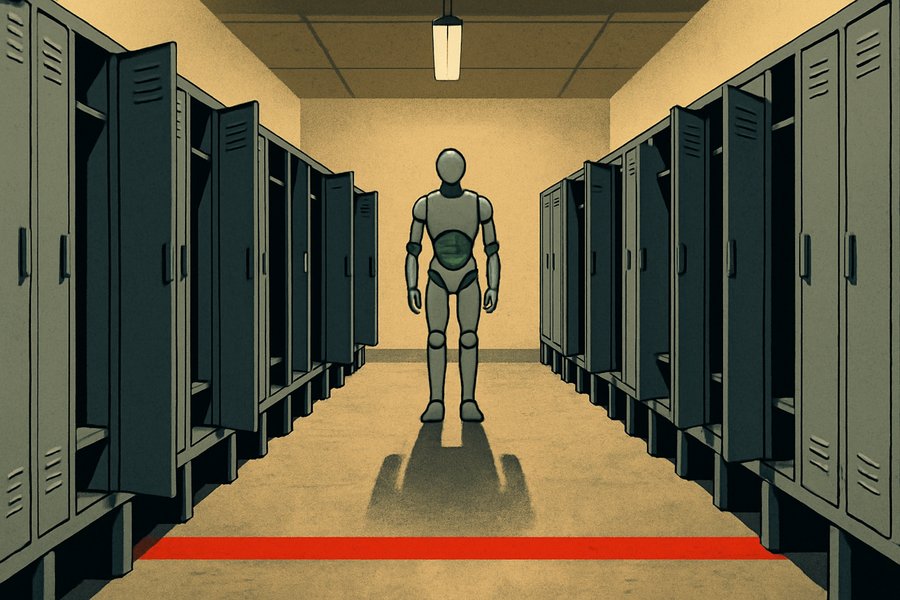
The backlash against automation is arriving from an unexpected direction: the people who build and deploy the machines. At a Hyundai assembly plant in South Korea, workers did not open negotiations over the company's rollout of humanoid and quadruped robots. They walked out. Organised by the Korean Metal Workers' Union, it is, by several accounts, the first major industrial strike in the global auto sector triggered explicitly by humanoid robot deployment: not wages, not safety, but the physical arrival of machines built to do human work.
What makes Hyundai's case sharp is its ownership structure. The robots on its floor are Boston Dynamics machines, and Hyundai has owned Boston Dynamics outright since 2021. There is no outside vendor to bargain against, no third-party supply contract acting as a brake on how fast the robots spread. Hyundai is at once the developer and the deployer, free to accelerate at the pace of its own engineering roadmap. The union's complaint is precise: management has offered assurances about jobs but no binding, enforceable limit on displacement as the robots improve. That is not a Luddite panic. It is an accurate reading of an incentive mismatch.
Four thousand miles away, a different kind of worker is making a related argument. In the San Francisco Bay Area, tech employees, some of them the very engineers who built modern AI, have been protesting outside the offices of Anthropic, OpenAI and Google DeepMind. One laid-off copywriter told the Los Angeles Times that his company never said it was replacing him with AI, but that was plainly the impression he was left with. More than 4,500 Google workers have signed a petition demanding severance guarantees and protections against AI-driven layoffs.
The two protests rhyme because they share a diagnosis. A traditional factory robot is bolted to one station and does one thing. A general-purpose humanoid, or a capable software agent, can be retasked in software, which changes the question from "we need fewer welders" to "we may need fewer workers, category undetermined." That ambiguity is exactly what unsettles people. A Stanford report this year found a third of organisations expect AI to shrink their workforces, with early-career software developers among the most exposed: precisely the group that was told for a decade to learn to code.
The Bay Area movement is a strange coalition, and that is part of its significance. Some protesters care mostly about jobs; others, like the group Stop the AI Race, are more worried that systems smarter than humans will become impossible to control, and want an international treaty and a pause on the largest training runs. "We might be winning the AI race to make humanity second place," one protester said. The job-loss activists and the extinction-risk activists disagree about almost everything except the single demand for a slower pace.
What ties Seoul to San Francisco is a question of who holds the throttle. Hyundai's workers want a contractual brake on deployment; Google's want one on layoffs; the Stop the AI Race marchers want one on training itself. In every case the people closest to the technology are asking for the thing the market is built to deny them: the ability to say slow down. The strike that settles the Hyundai dispute will set a template every carmaker is watching, because the terms that end it will price the cost of physical AI for the next decade. The builders, it turns out, were the first to read the fine print.