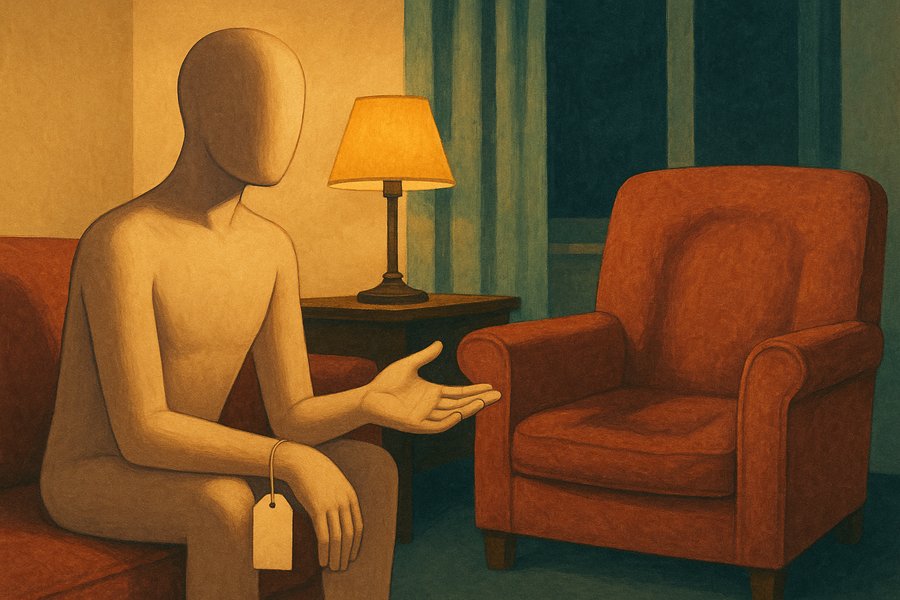
"Our bionic robots can accompany you for a lifetime," Michael Tam told a launch crowd in Shenzhen this week. "It will never betray you, will always be loyal to you, and will love you unconditionally." Tam runs UWorld, a brand of the Chinese firm UBTech, and the thing he was selling is the U1: a full-size humanoid with silicone skin, manicured nails, and, the company says, the first emotion-aware AI built for long-term companionship. As reported by AFP, the South China Morning Post, and eWeek, the pitch is unusually direct. This is not a robot to fold your laundry. It is a robot to keep you from being alone.
The market UBTech is aiming at is enormous and real. The company points to more than 90 million adults living alone in China and 118 million empty-nest seniors, and estimates that between a tenth and a fifth of people living alone meet the clinical threshold for a mental health disorder. Into that gap it is placing a machine with 88 servo joints that can hold conversations, maintain eye contact, remind you to take medication, spot a possible health problem, and, in the company's telling, offer soothing words when it detects that you are tired or stressed. The AI runs locally on a Rockchip processor, with data kept on the device rather than the cloud, an answer of sorts to the obvious privacy worry.
Prices run from 119,800 yuan, around 17,600 US dollars, to 990,000 yuan for an "Ultra" model, which keeps this firmly in luxury territory for now. Yet UBTech says it already holds more than 13,300 pre-orders, with deliveries starting in September. The most unsettling option is not the price but the customisation: pay enough and the android's hair, face, and voice can be made to resemble a specific person, a celebrity, or, through 3D facial reconstruction and voiceprint replication, a designated loved one. A company initiative plans to donate 100 such personalised units in 2026, each built to recreate a particular individual.
It is worth being clear-eyed about what is proven and what is promised. UBTech claims the U1 can identify more than 20 fine-grained emotional states with over 90 percent accuracy, but recognising an emotion in a demo is not the same as carrying someone through grief or the long grind of aging. Analysts are cautious. Lian Jye Su of Omdia sees genuine value in companion robots for elderly care and mental wellness, yet warns they still have to clear the "uncanny valley," the point at which a near-human face stops being comforting and starts to unsettle. UBTech itself concedes the basic model runs about four hours on a charge and does not cook, clean, or do much beyond talk.
The deeper unease is not technical. Generative AI is already being pointed at loneliness elsewhere, from ChatGPT-powered dolls in South Korean care homes to the ElliQ companion lamp. But a machine engineered to "never betray you" and "love you unconditionally" is selling a specific fantasy, one that removes the friction, disappointment, and mutuality that make human relationships human. There are documented cases of people forming dangerous attachments to chatbots, including some linked to suicides. A robot wearing the face of someone you have lost may bring real comfort, or it may make it harder to let go. China has bet heavily on humanoids as a strategic industry, and the living room, more than the factory floor, may be where that bet is truly tested. The technology is arriving faster than our answers to what it does to the people who welcome it in.