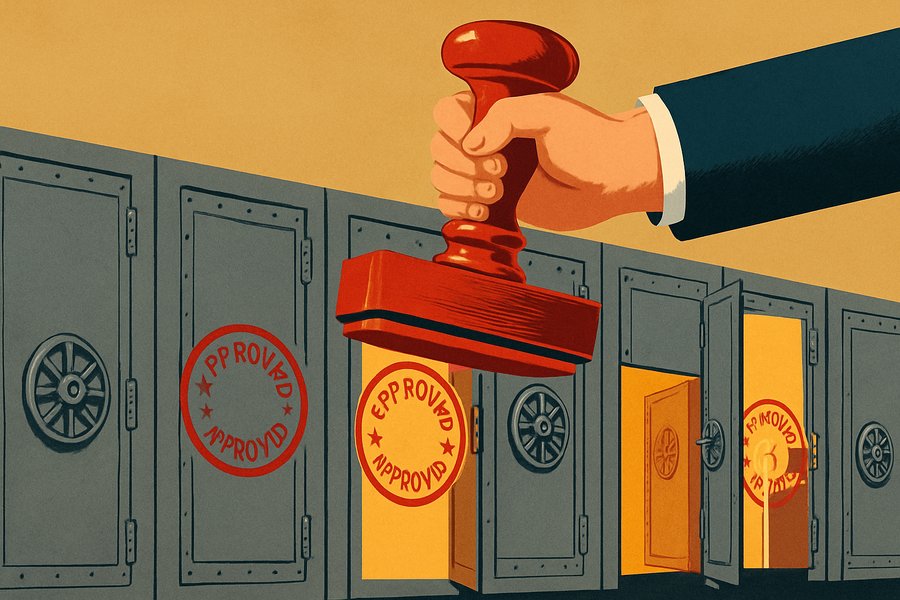
Friday was the day the new shape of American AI policy became impossible to ignore. In the space of a few hours, the US government did two things that, taken together, mark a quiet revolution: it lifted part of its two-week ban on Anthropic's most powerful model, and it pressed OpenAI to hold back its newest one. Both companies ended the day in the same strange position, releasing their flagship systems not to the public but to short lists of customers vetted, one by one, by the Trump administration.
Anthropic got the reprieve. Commerce Secretary Howard Lutnick wrote to the company to say that "appropriate safeguards are in place" to let "certain trusted partners" use Claude Mythos 5, the cybersecurity model the government had effectively banned on June 12 over fears it could be jailbroken and turned into a weapon for finding software flaws. Semafor reported the model can now be redeployed to more than 100 US institutions that defend critical infrastructure. Fable 5, the safer consumer version Anthropic had pitched as the public face of the same capabilities, remains offline, which many in cybersecurity find baffling given it was the cautious one.
OpenAI walked into the same room from the other door. It launched GPT-5.6, a family of three models led by a flagship called Sol, then announced that at the administration's request it would preview them only to roughly twenty approved partners before any broad release. The company was visibly uncomfortable. "We don't believe this kind of government access process should become the long-term default," it wrote, warning that it keeps the best tools from the developers, enterprises and cyber defenders who need them. Reporting suggests OpenAI, Anthropic, Google, xAI and Microsoft have all been handing models to the government early; only Meta has held out.
What unites the two announcements is what sits underneath them: almost nothing. President Trump's early-June executive order asks frontier labs to volunteer their models for a 30-day national security review. It says nothing about vetting which customers may buy them. So the customer-by-customer gatekeeping now happening has no statutory basis at all. Representative Lori Trahan put it bluntly, objecting that "appointees in Washington" are deciding "who's in and who's out" with "no law, no process, no oversight." Stanford's Alex Stamos was harsher, saying nobody in the security industry sees a factual basis for the Fable ban and that, for an administration claiming it wants to beat China, this is "about the dumbest thing they could possibly do."
The deeper tension is that the AI companies asked for this, sort of. For years Altman and Amodei warned that the technology could go badly wrong and begged government to take it seriously. Now that Washington has, abruptly and opaquely, they are discovering that "take it seriously" can mean a near-total freeze on new releases while officials decide case by case what is allowed. The open question, as both labs eye eventual public offerings, is whether this hardens into a durable licensing regime or stays an improvised bottleneck that, as critics note, hands China a clear runway while American labs wait for permission.