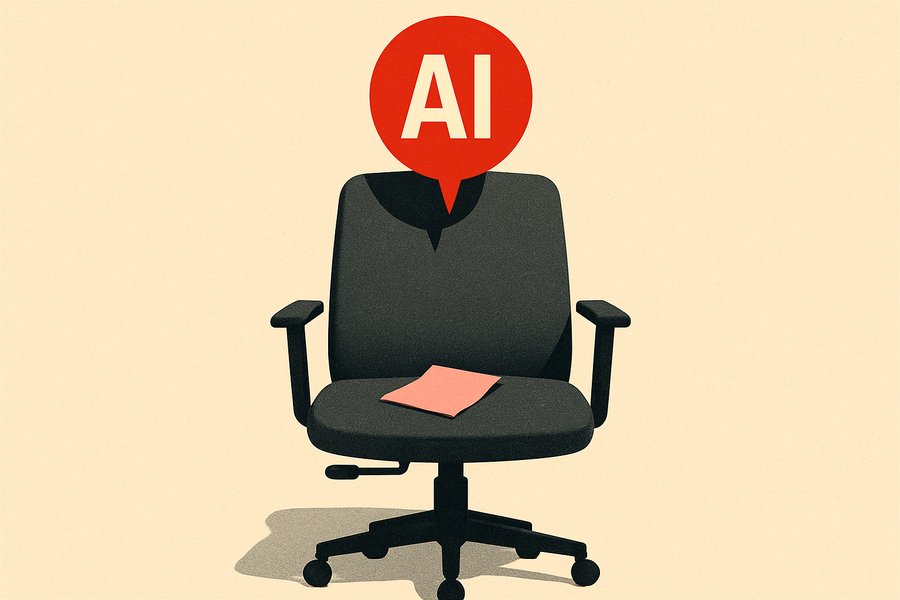
Nvidia's CEO sat down with Singapore broadcaster Channel NewsAsia on Monday and did something the chief executives of his largest customers have been very careful not to do: he said the thing out loud. The narrative that connects AI to job losses, Jensen Huang told interviewer Victoria Jen, is "just too lazy" and "doesn't make any sense." Generative AI, he pointed out, has only really been productive for about six months. So how, exactly, did it cause the layoffs that companies announced two years ago?
The setting matters here. Huang is the supplier whose chips have made the present AI boom possible, and Nvidia is the world's most valuable company largely because of orders from the same firms he is now criticising. "It was just a way for them to sound smart," he said of the executives doing the blaming. "I really hate that. I think we're scaring people and that's irresponsible." He did not name names. He did not have to.
The named examples were already in the news. Standard Chartered's chief executive Bill Winters last week told staff the bank was replacing "lower-value human capital" with technology as part of plans to cut more than 7,000 jobs over four years. He later apologised. Reuters has reported that Meta is preparing to lay off twenty percent or more of its workforce, framed as a way to offset heavy AI spending and bet on productivity gains. Amazon has trimmed sixteen thousand corporate roles. The standard explanation, repeated in earnings calls and internal memos across the sector, is some variation on "AI is letting us do more with less."
What Huang is calling out is the gap between that story and the calendar. The most powerful generative models reached enterprise utility in the last few quarters. Agentic tools that can autonomously complete work began landing in 2026. The headcount reductions that companies have attributed to those tools were, in many cases, planned and executed before the tools existed in usable form. AI did not write the restructuring plans. It is being asked, after the fact, to carry them.
This is not a small distinction. If layoffs are genuinely driven by automation, they fit a narrative of inevitable structural change that no one in particular needs to feel bad about. If they are driven by macro pressure, shareholder demands or strategic refocus, and AI is being used as polite cover, then the public conversation about where work goes is being shaped by a story that is not quite true. Regulators, journalists and workers are all calibrating their responses to a phenomenon whose scale is being inflated by people who would rather not say "we are cutting costs."
Huang's own line on what people should do is consistent with everything he has said for years. Workers will not lose their jobs to AI, he argued, they will lose them to colleagues who learned to use it better. Companies that get more productive will hire more people, not fewer. Whether that turns out to be true is the open question of the decade. The technology is real. So is the wave of redundancies. The disputed part is the causal arrow between them, and Huang has just made it a lot harder for the executives in the middle to keep pointing it in one direction without showing their working.
It is worth watching what happens next. The cleanest response, for companies that genuinely have automation-linked headcount stories, is to publish them. Which tasks. Which teams. Which tools. Which timelines. Anything less, after Huang's intervention, starts to sound like the lazy answer he was complaining about.