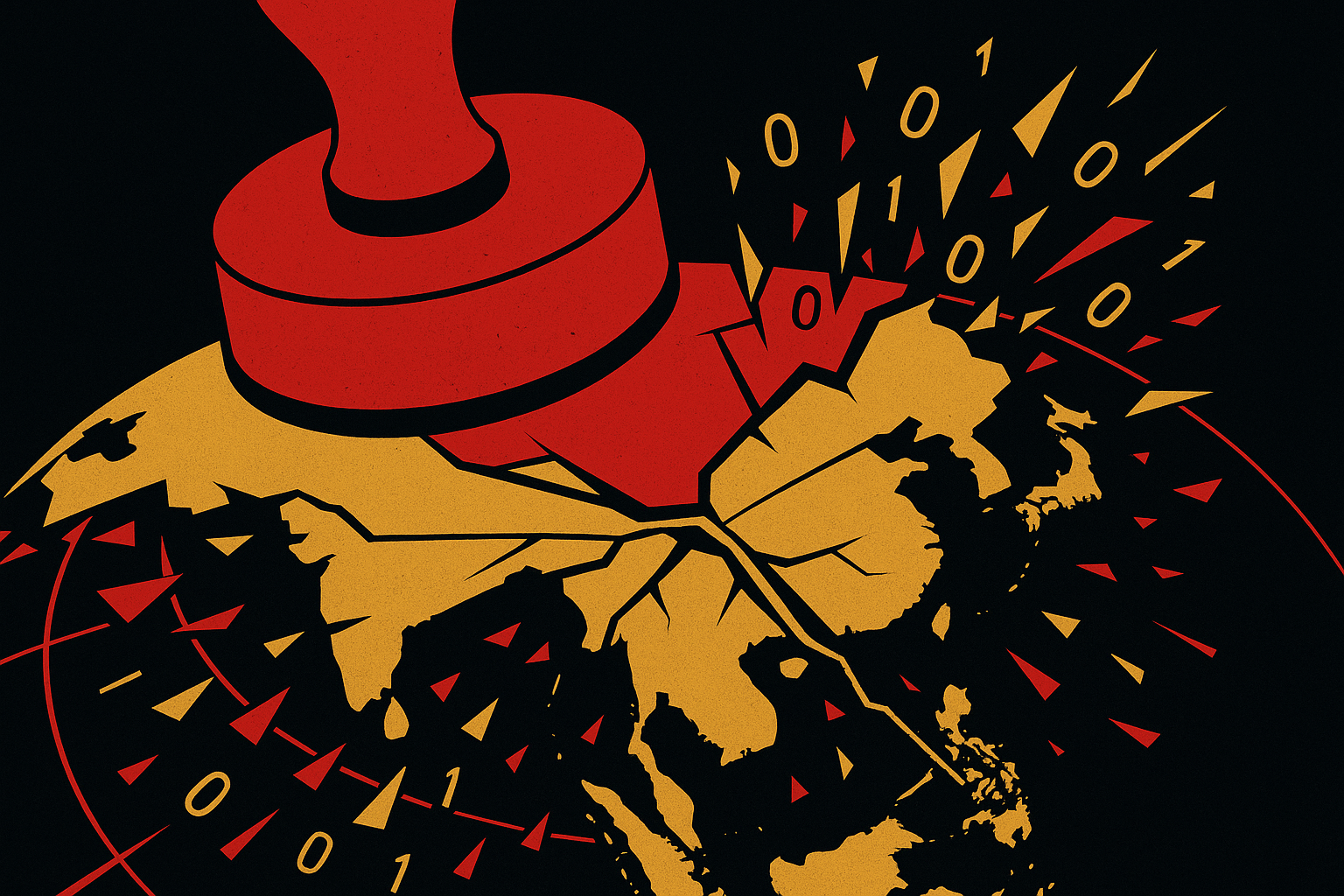
China approved the deal in December. By April, it had killed it. When Beijing's National Development and Reform Commission posted a terse notice ordering Meta to unwind its $2 billion acquisition of AI startup Manus, it did more than create a headache for Mark Zuckerberg's AI strategy: it established a principle with wide consequences. Jurisdiction, in Beijing's new framework, follows where technology was built and who built it, not where a holding company is incorporated.
The immediate problem for Meta is practical and almost farcical. Unwinding the deal is easier ordered than accomplished. Manus employees have already joined Meta's AI team. Investors including Tencent and HongShan Capital have already received their payouts. Meta has had months to absorb the company's systems, data, and engineering knowledge. The NDRC's notice tells the parties to reverse a transaction whose most important parts cannot be reversed. A Meta spokesperson said the deal "complied fully with applicable law" and that the company anticipated "an appropriate resolution." What an appropriate resolution looks like when investors are paid and employees are onboarded is not obvious.
What is obvious is the message the reversal sends. Manus was founded by Chinese engineers in Beijing, received Chinese state support in its early stages, and then relocated to Singapore before the Meta acquisition was announced. That relocation was not coincidental: Singapore incorporation has been the standard route for Chinese tech startups seeking to attract Western capital and reduce regulatory risk on both sides. Shein and other Chinese consumer tech companies used the same playbook. The NDRC's ruling directly challenges the premise. Chris Pereira, a consultant who tracks the China-US tech rivalry, summed it up plainly: "Singapore incorporation alone does not de-risk a deal from Chinese regulatory reach."
The deeper puzzle is why Beijing reversed a decision it had already made. Foreign Policy's reporting suggests the initial approval came from regulators focused on legal and commercial dimensions, before China's security establishment intervened. The gap between those two reviews reflects a government whose different arms do not always speak to each other, but it also reflects the shifting stakes. When Meta acquired Manus in December, the deal was primarily a commercial story. By April, with the US-China trade dispute intensifying and Trump planning a visit to Beijing, it had become a symbol of a broader question: which country controls Chinese-founded AI talent and technology?
The timing is not lost on observers. CNBC noted that the announcement came days before Meta's scheduled earnings call and less than a month before the planned Trump-Beijing summit, where trade and technology investment were already on the agenda. Duncan Clark, an early Alibaba advisor who tracked the deal's collapse, said the result was unambiguous for future founders: "After Manusgate, founders will know that if you start in China, you stay in China." That is a warning to a whole ecosystem of Chinese AI startups and their international backers.
The socialist China perspective, as articulated by researchers cited in the SCO analysis, reads the decision as legally coherent rather than arbitrary: China is asserting that jurisdictional control follows where technology is created and who creates it, not where capital routes itself for regulatory convenience. Whether one agrees with that principle or not, it represents a clear and consequential departure from how cross-border tech acquisitions have operated for two decades. The era in which a Singapore address changed the regulatory calculus for Chinese-built technology appears to be over.
What this means for AI specifically is worth sitting with. Talent, as several analysts noted, has become the new front in the US-China technology competition. Physical chips can be restricted by export controls. Software models can be monitored and limited. But the knowledge in the heads of engineers who built a cutting-edge AI agent, and the social networks and institutional relationships that made the company possible, are harder to contain. The Manus reversal is partly an acknowledgment that China sees its best AI engineers as a national strategic asset, not simply as workers free to take the best offer. The question of whether that framing is sustainable, or whether it accelerates the outward migration of Chinese talent rather than preventing it, remains open.
Meta's investors shrugged: the company's shares were up 0.5% on the day of the announcement. Wall Street's reaction suggests the market sees the loss of Manus as a setback, not a catastrophe. But the rule that the deal established will outlast Meta's stock price. Any US company seeking to acquire Chinese-founded AI technology now faces a precedent suggesting that Beijing can reach back through time and jurisdiction to undo deals it later decides it regrets. That changes the calculus for every investment banker, venture capitalist, and technology executive who has been watching the US-China AI race and wondering where the lines are drawn.