The two companies most likely to define what the public market thinks of artificial intelligence are Anthropic and OpenAI. Both are widely expected to go public this year. And both are trying to do so against a backdrop of public opinion that is turning, measurably and across several dimensions, negative. That tension is not just an investor relations problem. It is a structural one, and it has been building for months.
CNBC reported this week that AI is losing the popularity contest in the United States. The survey data is striking not just in direction but in specificity: more Americans are reporting direct, firsthand experience of AI's negative effects on their lives, whether through job loss, higher costs, or concerns about energy use and data privacy. This is not abstract wariness. It is lived experience feeding back into polling numbers. And the timing could not be worse for companies that need retail investor enthusiasm and broad public goodwill to justify sky-high IPO valuations.
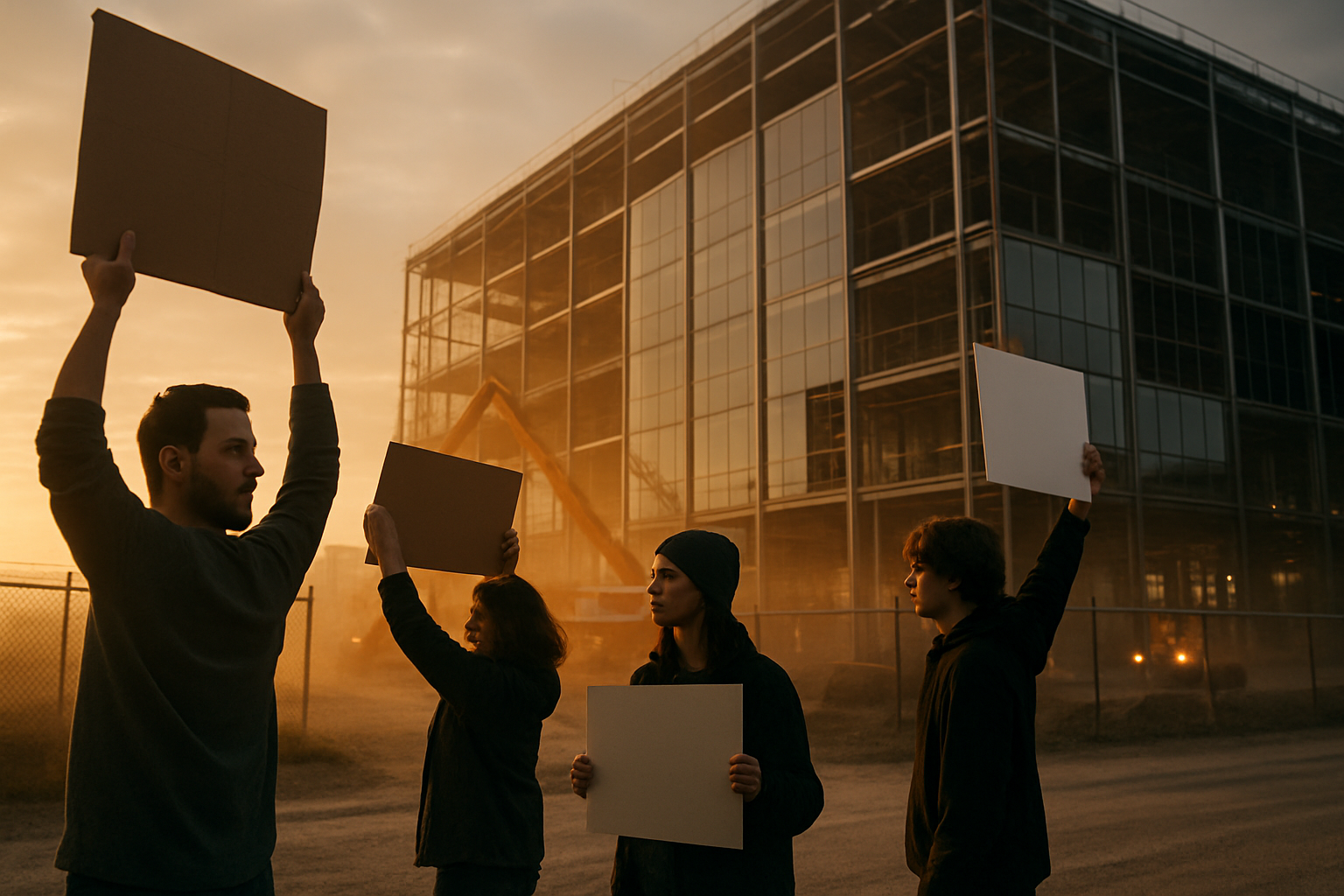
Data center opposition is accelerating the problem. At least $156 billion in data center projects were cancelled or delayed in 2025 alone, as local opposition and litigation pushed back against the power demands and land footprints of hyperscale AI infrastructure. The energy demand story has moved from editorial pages to state legislatures, and it now shows up in local campaign platforms. OpenAI's valuation in particular rests heavily on its data center buildout ambitions, which it has described as a strategic advantage. That advantage is becoming politically contested in a way that was not true even eighteen months ago.
There is also a quieter concern circulating among analysts, one that cuts closer to the actual business model. A CNBC analysis published on April 17 argued that AI token demand is structurally inflated, and that only Anthropic is being realistic about what that means for growth projections. The argument runs as follows: a substantial portion of AI usage today comes from companies building and testing integrations, developers experimenting, and enterprises running pilots that have not yet converted to sustained production workloads. The raw token numbers look spectacular. The underlying conversion rates are murkier. If the demand story is partly a function of the industry selling to itself, the public market will eventually notice.
Against this backdrop, the gap in secondary market sentiment between OpenAI and Anthropic is remarkable. Demand for Anthropic shares has been described as nearly insatiable, with the company's annualised revenue jumping from $9 billion at the end of 2025 to $30 billion by the end of March this year, most of it driven by enterprise demand for its coding tools. OpenAI shares, by contrast, have been trading at a discount on secondary markets. Some OpenAI investors have reportedly begun hedging by acquiring Anthropic shares. The irony is notable: Anthropic was founded by people who left OpenAI over safety concerns, and it is now outpacing its former employer on both revenue growth and secondary market sentiment.
The divergence has a structural explanation beyond the revenue numbers. Anthropic's relative caution on capabilities, most visibly its decision to reduce Opus 4.7's cyber skills compared to its earlier Mythos model, has earned it a different kind of credibility with enterprise buyers who are navigating increasingly strict AI governance requirements. OpenAI's more aggressive product posture, including the rollout of GPT-5.4-Cyber and its push into agentic systems, generates more headlines but also more scrutiny from regulators and enterprise risk teams.
None of this means either company will fail at going public. Anthropic's revenue trajectory is genuinely extraordinary. OpenAI has scale and brand recognition that remain unmatched. But both will need to tell a coherent story about AI's social licence at a moment when the public has become considerably more sceptical. The companies that defined the current era of AI by moving fast are now discovering that the social infrastructure needed to sustain that growth requires a slower, harder kind of work.