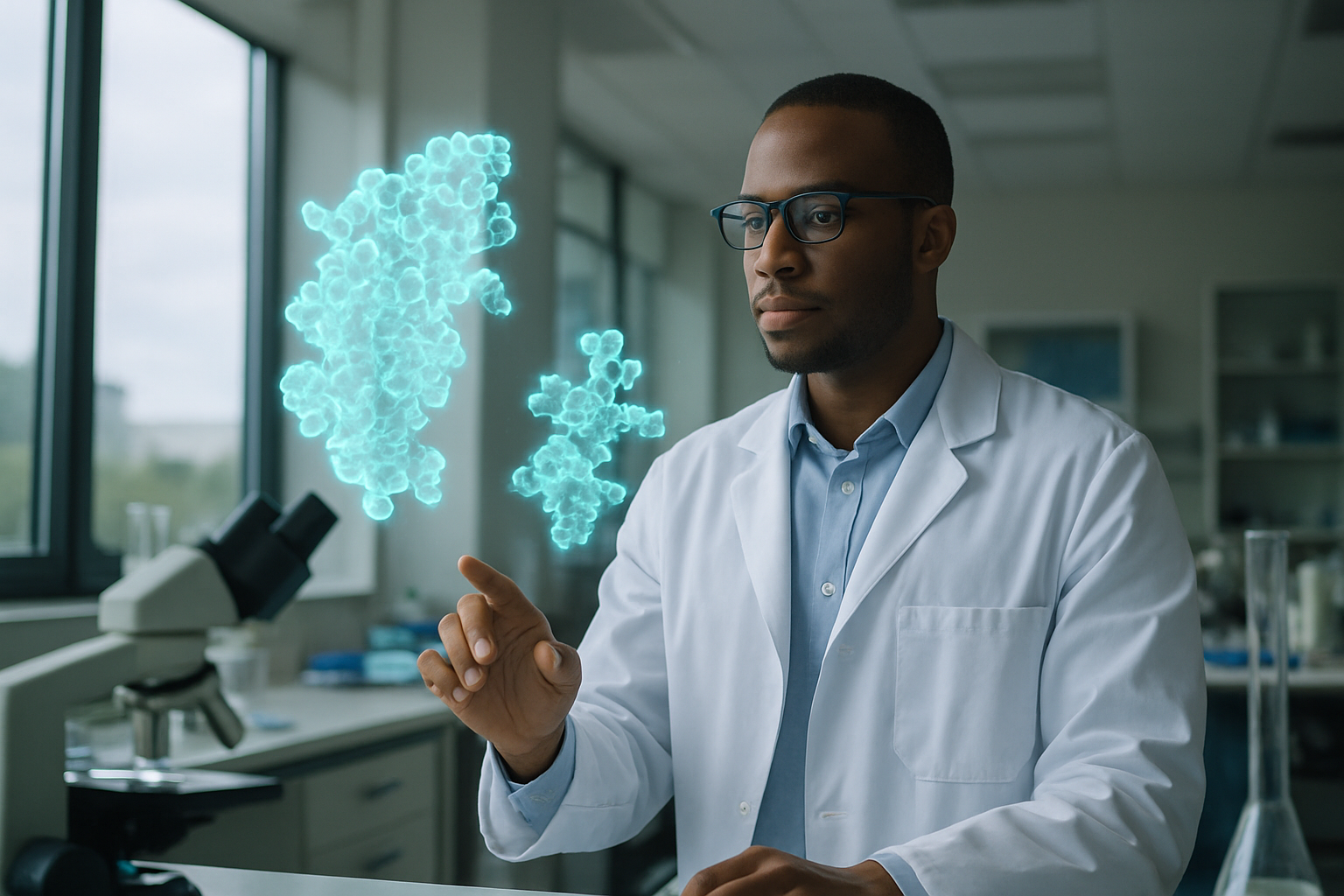
Rosalind Franklin produced the X-ray crystallography image that revealed the double helix structure of DNA. Watson and Crick used it, without her knowledge, to complete their Nobel-winning model. She died before the prize was awarded and so was never recognised by the committee. OpenAI chose her name for its new biology-tuned reasoning model, which arrived on April 16. Whether the choice is an act of genuine acknowledgement or simply elegant branding is a question left to the reader.
GPT-Rosalind is a domain-specific reasoning model built for life sciences work: drug discovery, genomics analysis, protein function prediction, and the grinding task of synthesising large volumes of scientific literature into actionable hypotheses. It is not a general-purpose model with a biology system prompt. OpenAI says it has been trained on datasets and evaluation regimes specific to molecular biology, clinical research pipelines, and regulatory science. The goal, in the company's framing, is to compress the distance between a promising compound and a patient who needs it.
The commercial ambition is clear. On April 14, two days before Rosalind's launch, Novo Nordisk announced a partnership with OpenAI explicitly to accelerate drug discovery using the new model. The Danish pharmaceutical company, whose GLP-1 obesity drugs have become among the most commercially significant medicines in recent history, is betting that AI-assisted compound screening and target identification can shrink the ten-to-fifteen year pipeline that currently separates a laboratory finding from an approved treatment.
Bloomberg framed the launch as OpenAI taking aim at Google, and that reading makes sense. Google DeepMind's AlphaFold transformed structural biology by predicting protein shapes with extraordinary accuracy, and the company has not been quiet about its ambitions in healthcare AI. A model purpose-built for reasoning over biological data, rather than predicting structure alone, is a different kind of tool. It is aimed at the scientists who need to think through what a structure means for a drug target, not just see it rendered in three dimensions.
The broader context is OpenAI's shift toward vertical specialisation alongside its general-purpose models. GPT-Rosalind follows earlier work with Retro Biosciences, where OpenAI released GPT-4b micro, a compact model engineered for protein design. That collaboration produced measurable results: the model generated novel variants of the Yamanaka factors, which are used in cellular reprogramming, significantly outperforming previous approaches. Scientific American covered a related collaboration with Ginkgo Bioworks, in which OpenAI demonstrated that general-purpose frontier models can accelerate synthetic biology research when tuned appropriately.
The open question is whether a model named for its domain actually outperforms a frontier general reasoner with the right context. The pharmaceutical industry has seen this argument before, with specialised clinical NLP tools losing market share to GPT-4 simply because the general model was good enough and already integrated. OpenAI will be aware of that history. The Rosalind branding, and the access program requiring researchers to apply for entry, suggests the company wants this model to be taken seriously as a credentialled research tool rather than a consumer assistant that happens to know some biochemistry.
Whether it proves genuinely superior to Claude or Gemini for biology work will depend on benchmarks that do not yet exist in any standardised form. Life sciences AI evaluation is still largely proprietary, conducted within pharmaceutical companies whose results never become public. Novo Nordisk's partnership may, in time, provide some of that evidence. For now, the model is in controlled release, and the name on the tin is doing a lot of work.