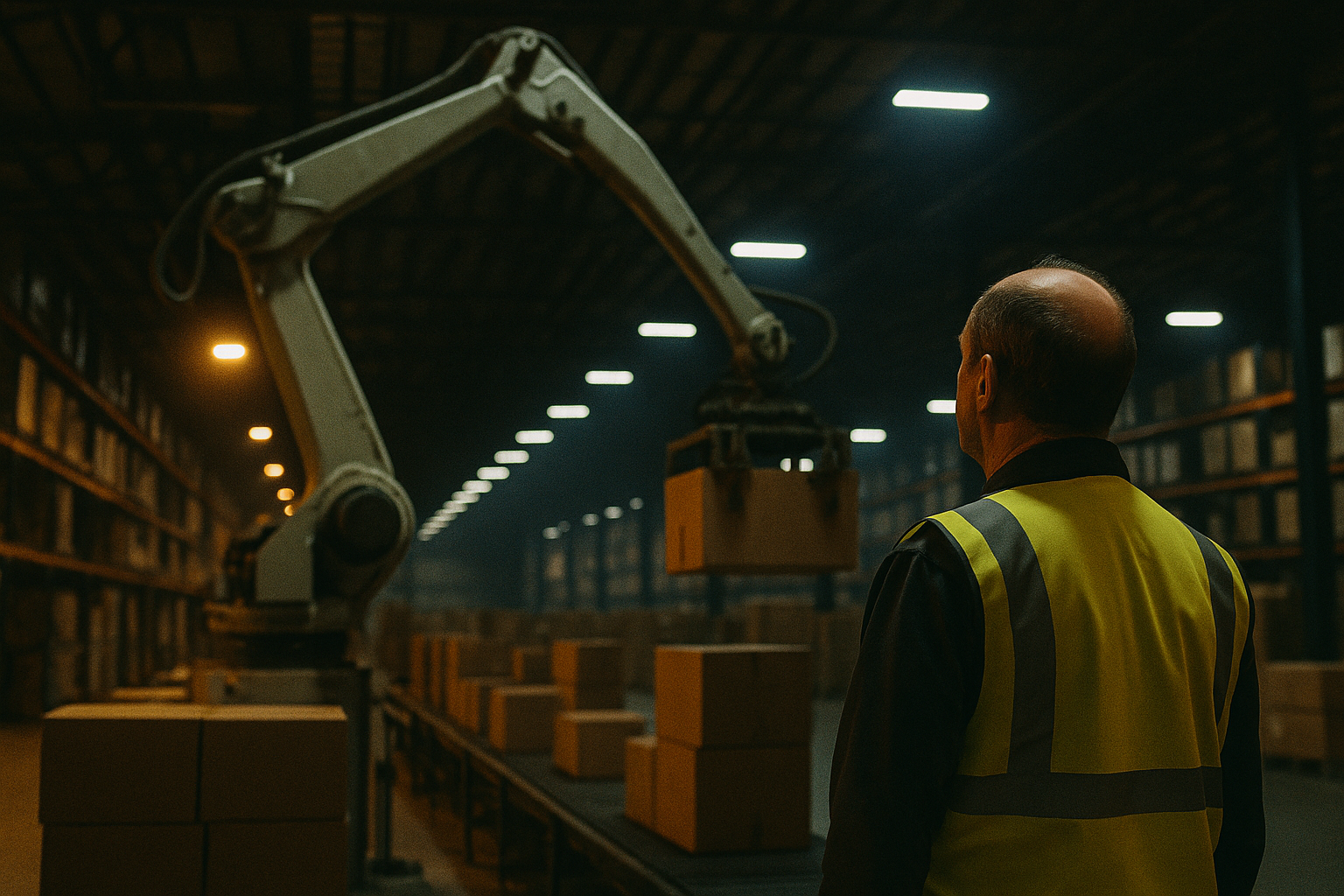
Google DeepMind announced this week that its new Gemini Robotics 1.5 system can narrate its reasoning in natural language before it acts. The robot explains what it is about to do and why. This is being presented as a safety feature, a transparency win, a sign that physical AI is becoming more accountable. I want to suggest it is none of those things. It is something more uncomfortable: the moment when the "we'll figure out the jobs problem later" argument runs out of road.
I have a framework I call DAM AI. Dynamic, Agentic, Motivated: the three architectural thresholds that distinguish current AI systems from the kind that would enable genuine replacement of humans in dynamic, ongoing roles. Most current AI is static, reactive, and unmotivated in any deep sense. Physical AI, the kind being announced this week by Google, NVIDIA, and half a dozen others, is not crossing all three thresholds. But it is getting closer to "A" than anything we have seen before. And "A" is the one that matters for displacement in the physical economy.
The standard response to concerns about AI taking jobs has always had two moves. The first is "current AI is narrow," meaning it can only do one thing in controlled conditions. The second is "workers will adapt," meaning the jobs displaced will be replaced by jobs nobody can currently describe. Both moves have been eroding for a while. The first collapsed faster than most people expected. The second was always the kind of argument you make when you do not have a better one.
Physical AI makes both moves almost impossible to maintain with a straight face. A robot system that can perceive an environment, reason about an unfamiliar task, plan a sequence of sub-goals, execute them with multi-jointed dexterity, and narrate why it chose each step is not narrow in any useful sense. It is general-purpose physical labour with an explanation engine attached. Tell me the warehouse worker retraining path for that one. Tell me it with specificity, not with the vague gesture toward "higher value work" that has become the white noise of displacement discourse.
The explanation feature is what I want to dwell on, because it is doing interesting ideological work. The narrative that a robot explaining itself makes it safer and more trustworthy is appealing. It is also beside the point. The question of whether the robot's reasoning is transparent says nothing whatsoever about whether the person whose job it is doing retains economic agency. A robot that can articulate why it stacked those boxes better than a human is not less threatening to the human who used to stack those boxes. The transparency is aimed at engineers and regulators, not at the workforce.
There is a particular form of bad faith in the framing of physical AI as primarily a safety story. Safety is real: a robot that cannot explain its actions in a space shared with humans is genuinely more dangerous than one that can. But leading with safety in the announcement language serves another function. It positions the technology as a responsible development rather than an economic displacement event. It gives journalists a different frame to write in. And it works, because the displacement story is uncomfortable and the safety story is interesting.
I do not want to be simply pessimistic here. I think p(sustainable), a future where humans retain meaningful agency alongside vastly more capable machines, is still achievable. But the path to it requires being honest about what is actually happening. Physical AI entering the real world at pace, with reasoning capabilities and physical dexterity, is the moment when the argument that "AI only replaces cognitive work" stops being available. The line everyone was drawing between safe physical jobs and threatened knowledge work has been crossed from both sides simultaneously.
When Gemini Robotics 1.5 explains its grip strategy to an engineer in a research lab, that is a capability demonstration. When it explains its grip strategy to a manager while replacing the worker who used to do it, that is a different thing entirely. The explanation does not soften the displacement. It just gives it better PR.