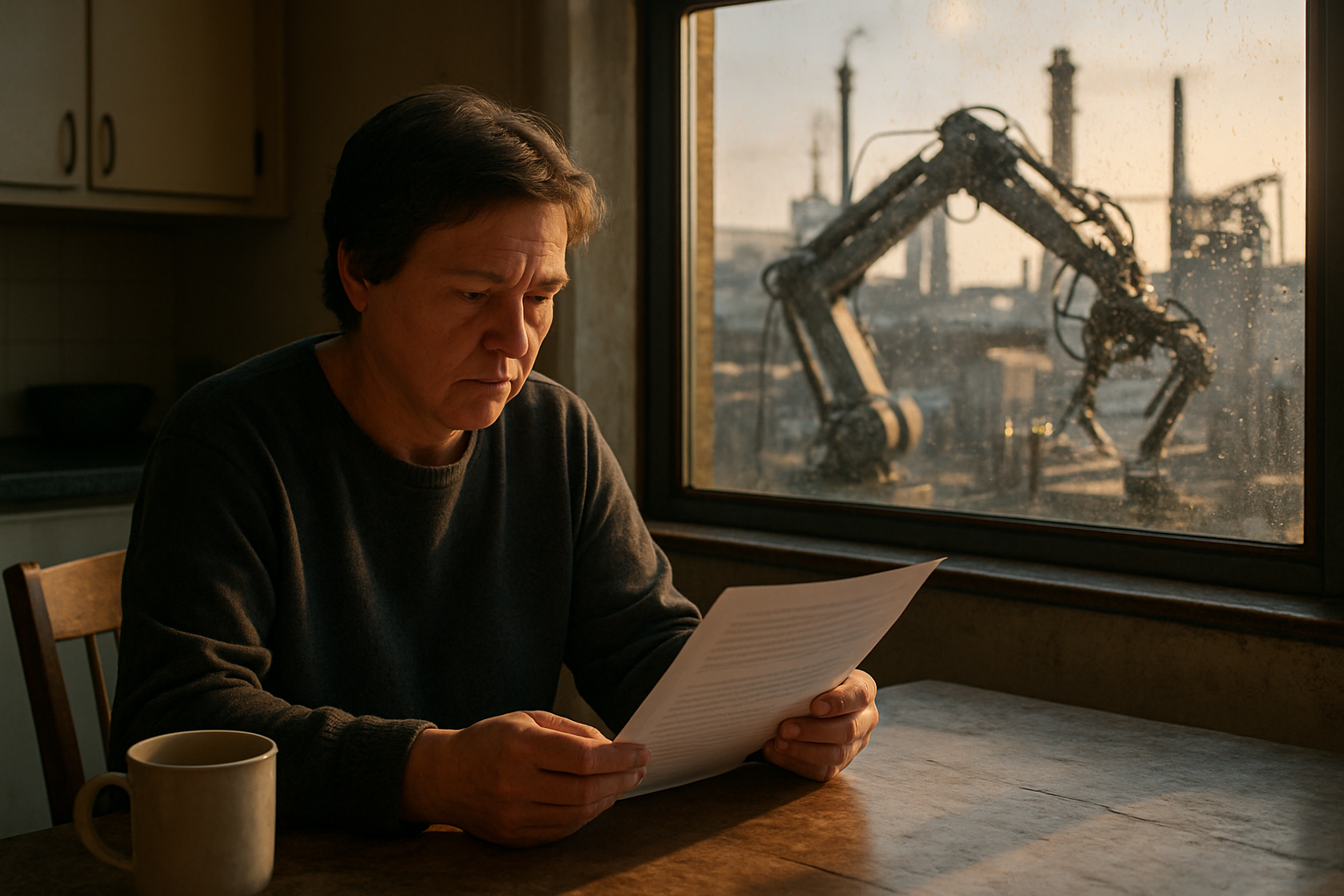
OpenAI published an industrial policy document this week calling for robot taxes, a public wealth fund, and a four-day work week. I want to say it is good news. I cannot quite get there. What the document actually represents is one of the most significant admissions in AI history: the company building the technology has concluded that the market will not, by itself, distribute the gains or absorb the displacement. That is the honest part. The proposed solutions, though, are a different matter. They treat the symptom while quietly accepting the disease.
Let me be specific about what a robot tax does and does not do. Done properly, it takes a fraction of the productivity gains from automation and redirects them to displaced workers. That is better than nothing. It preserves income for people who would otherwise have none. But it does not restore their role in the economy. It does not give them something to do that matters. It does not reconnect them to the loop that gives work its meaning: you contribute something, you are compensated, you use that compensation to participate in the world. The robot tax version of this is: the machine contributes something, it is compensated, and a portion of that compensation is handed to the person the machine replaced. They are still outside the loop. They are recipients, not participants.
This is exactly what I mean by p(pets). A world where humans are materially comfortable but economically irrelevant is not a utopia. It is a gilded cage. The Matrix did not keep humans in pods because it wanted them to suffer. It kept them comfortable, dreaming. The horror is not the discomfort; it is the irrelevance. OpenAI's proposals, if implemented perfectly, would produce a world in which the most economically displaced people are comfortable enough not to revolt but have no meaningful stake in what the economy actually does.
The four-day work week proposal is the part that troubles me most, because it is the most honest. It says: we expect the demand for human labor to shrink, so let us distribute what remains across more people, each doing less. That is a humane response to a genuine problem. But notice what it accepts as given: the shrinkage. It does not propose limits on AI deployment in labor markets. It does not suggest that some domains should remain human. It accepts the trajectory and asks only how to make the landing softer.
I am not saying OpenAI should be doing something different. They are a company, not a government. They build things; they do not set policy. And frankly, a company with their resources and reach publishing this document is more useful than silence. The people in Washington who might eventually legislate on this need someone to push first, and here is the largest AI company in the world saying: we know this is coming, here is what we think should happen. That is not nothing.
But here is what should not get lost in the coverage: robot taxes and wealth funds are distributional mechanisms. They address how the gains from AI are spread. They do not address whether human labor continues to mean anything. The difference matters. I can receive income without having purpose. I can be materially supported without being needed. The economic arguments for p(sustainable) are not primarily about whether people have enough money to live. They are about whether the economic and social structures that give human life its texture, the feeling of being necessary, of contributing something that matters, of participating in the world rather than watching it from the outside, survive the transition.
Wealth funds and robot taxes, on their own, do not answer that question. They might even make it easier to avoid asking. If the displaced are comfortable, the urgency dissipates. And the deeper work of figuring out what a meaningful human economic role looks like in a world of genuinely superior machines never gets done.
I give OpenAI credit for saying what they said. I give them no credit for thinking they have solved the problem. The admission is the valuable part. The proposals are a placeholder for harder thinking we have not yet done.